
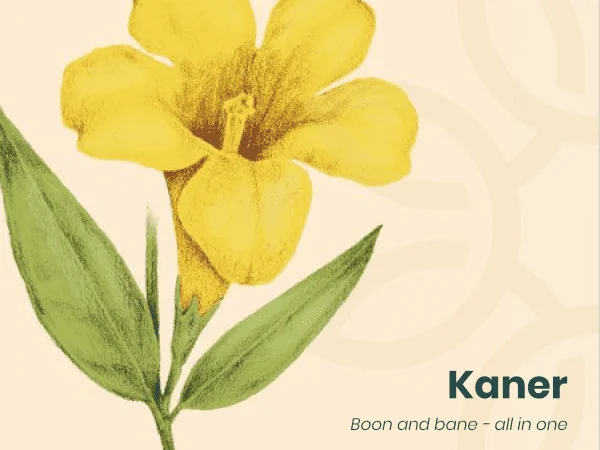
Kaner
Oleanders or kaner are one the most talked about flowers – for good and bad reasons both.
Kaner or karavira (Nerium indicum) as its popularly known in India, holds a special place in Ayurvedic medicine and Hindu religion. Strong bushy structure, colourful flowers and deep green leaves make it one of the most favourite ornamental plants in landscaping throughout the country.
It is a paradox plant. On one hand it is considered to be highly toxic for humans, pets, birds, etc. On the other hand, this indigenous, hardy plant of India is loaded with healing properties too. Almost all parts of the flower from its roots, barks, leaves have rich medicinal quotient. From skin disorders to treating life-threatening diseases such as cancer, diabetes, etc, Kaner is nothing less than a miracle herb.
As per Vastu Shastra, the white kaner flower is considered to bring wealth and prosperity as its associated with Goddess Lakshmi. On important festivals, kaner is offered to Gods for eternal health and happiness.
Kaner or karavira (Nerium indicum) as its popularly known in India, holds a special place in Ayurvedic medicine and Hindu religion. Strong bushy structure, colourful flowers and deep green leaves make it one of the most favourite ornamental plants in landscaping throughout the country.
It is a paradox plant. On one hand it is considered to be highly toxic for humans, pets, birds, etc. On the other hand, this indigenous, hardy plant of India is loaded with healing properties too. Almost all parts of the flower from its roots, barks, leaves have rich medicinal quotient. From skin disorders to treating life-threatening diseases such as cancer, diabetes, etc, Kaner is nothing less than a miracle herb.
As per Vastu Shastra, the white kaner flower is considered to bring wealth and prosperity as its associated with Goddess Lakshmi. On important festivals, kaner is offered to Gods for eternal health and happiness.