
You have been thinking of bringing plants home for some time. But you’re confused or hesitant on which ones to get, where to keep, how not to kill them. Or, you already have plants in your garden space (window, balcony, terrace, lawn) but keep jostling with their survival from time to time. Well, this is a journey for most of us. Starting your garden with the right knowledge and materials is the key to addressing your concerns.
With the help of the internet especially Instagram, one may argue that choosing houseplants is simple and straight-forward today. Nursery operators have elaborate sections inundated with “indoor plants” they claim are maintenance friendly. And to take care of them, we now have mobile apps powered by AI that can help us to identify the names and diseases and perhaps, better take care of them.
While all this may be true to some extent, the challenge lies in getting the right information meant for your own garden space. Not generic rulebooks meant for all. Before you decide to buy any plant or pot, you must consider the following factors in your house:
Light condition For spaces or corners that receive direct sunlight, choose plants that can withstand it such as flowering plants such as Ixora, Jasmines, Desi Hibiscus, Kaner, etc. Or herbs or edibles such as Pudina, Oregano, Lemon, Ajwain. Certain foliage plants include Rubber Plant, Schefflera, Palms, etc. Even exotics like Fiddle Leaf Fig or Radermachera thrive in direct light against popular belief. Depending on the hours of sunlight that space receives, you can pick the desired plant that won’t burn out in the sun or won’t wither away in its absence.
Ventilation This is a very important factor to consider given the hot, humid, and unpredictable weather of Mumbai. Lack of fresh air can degrade the health of plants, just like ours and invite pests, diseases which make them high on maintenance. Instead of keeping plants in zero ventilated areas, choose a spot which allows fresh air at least for a few hours of the day. Or move the plants is breezy spot at least twice a week.
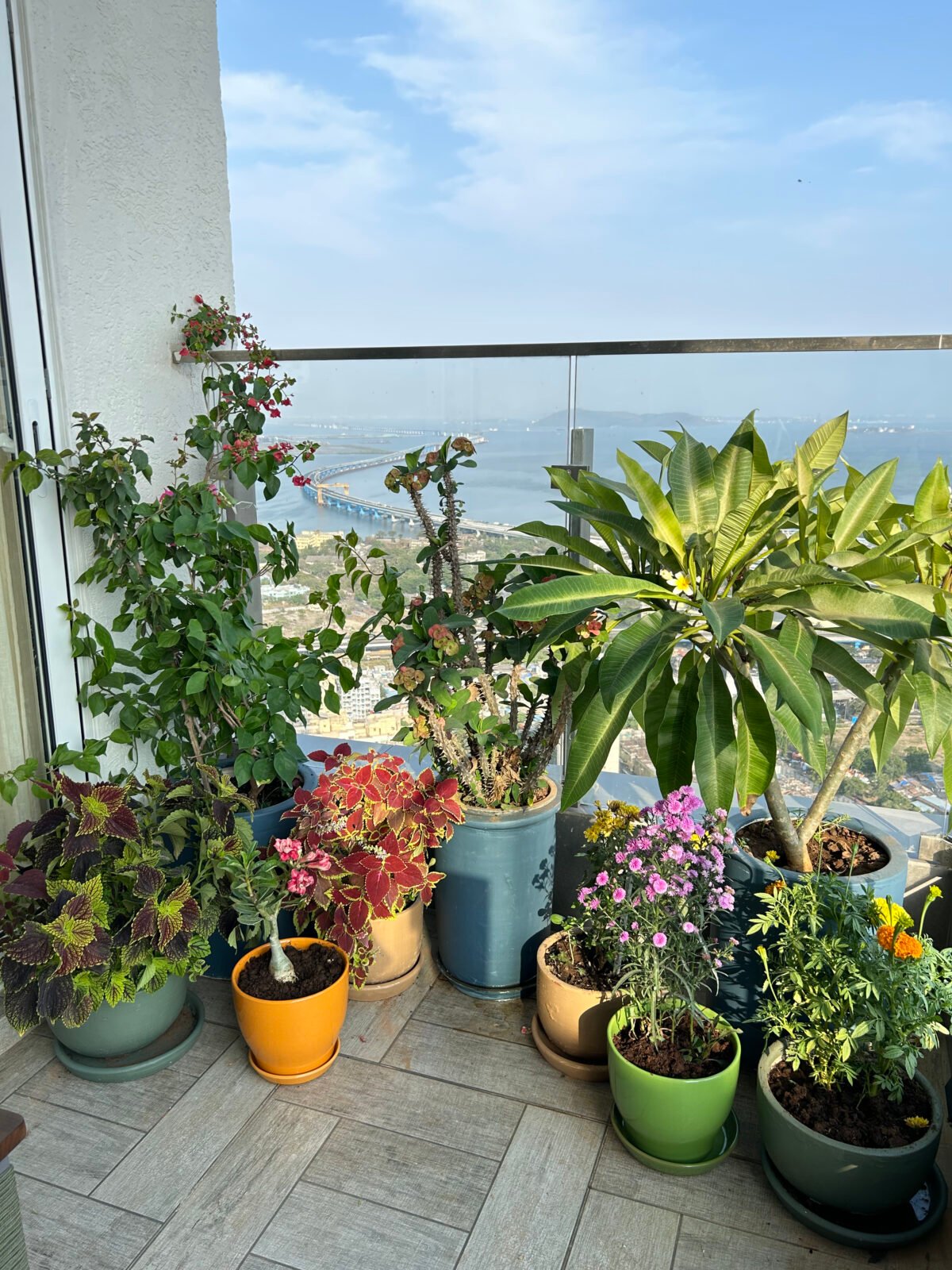
Materials If your house lacks bright daylight, then avoid using non-porous materials such as plastics or ceramics as they don’t allow water to evaporate easily. In turn, use fabric grow bags as inner liners in place of plastic pots or simply use the age-old terracotta planters to always keep your plants healthy.
Watering This is the most critical aspect which can make or break your garden eventually. Whichever material you choose, watering the plants should be regulated and personalized to each plant’s need. Terracotta needs lesser water as the clay keeps the soil moist and aerated for a longer period. Plants which are kept in direct sunlight always, may need water daily v/s plant which are kept in indirect light.
Above all, use native plants that are indigenous to our land, climate, and environment. Such plants by default make a garden low maintenance yet maintaining its natural beauty. While setting-up a home garden seems daunting, the tougher part is the post set-up maintenance.
Plants make a great addition to décor. However, this experience can be daunting if style takes over sustainability. Hence, it is imperative to strike a balance between science and aesthetics.
Simple techniques such as selecting plants to suit light + space conditions, reducing clutter, choosing the right materials, can help in creating a self-sustaining home garden.