Categories
blog Sustainable Gardening Basics

Did you know? Black soil is not always the best

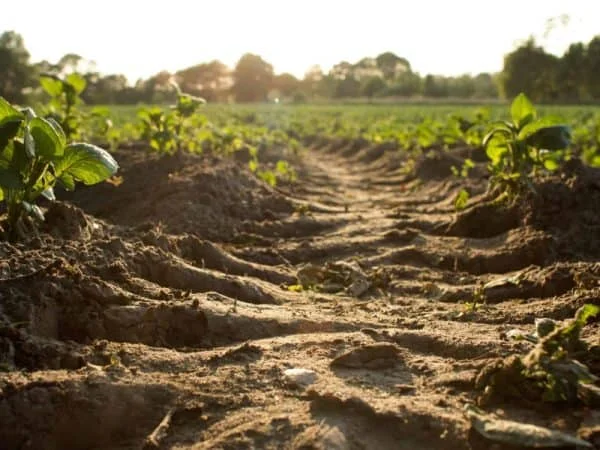
It is not necessary that blacker the soil, the better it is for your plants. There are several types of soil found across the world.
From colour to density, each kind of soil differs depending on a region’s typography and weather conditions.
Hence, while starting an indoor or outdoor garden, one must consider theIn India itself, every state has different kind of soil, rich in minerals in their own way. From black to red, from alluvial to marsh, soil conditions vary from region to region depending on the respective climate and environment.se three aspects:

1. Rich in minerals and organic matter

Each region in India has a different typography, geographical conditions and mineral compositions. Using local soil gives access to these rich deposits of minerals and organic materials.

2. Well-suited to support native plants

Local soil is equipped to handle the local plants. It complements the strengths of these plants and gives essential support in building immunity towards pests, other threats.

3. Avoids degradation of environment

Lesser transportation, lesser use of fertilizer, lesser burden on plants, there are several advantages of using native soil in gardens. They thus help in reducing the environmental impact.

Next time you want to change the soil of your plants or create a new garden, choose the locally originated ones. Here are the top benefits of using native soil in your garden v/s the commercially available garden soil.
Categories
blog Native Plants of India

5 houseplants which are disruptive for our local ecosystem

When it comes to choosing houseplants for indoor gardens, exotic plants dominate the decision-making. However, these beautiful plants come at a cost – financially and environmentally.

Today we are uncovering top 5 exotic plants that are invasive in India. Exotic plants means plants that are introduced from foreign regions.

These are common houseplants that belong to different countries and have been cultivated in India to beautify our homes. In the process, they have also proven to disrupt and destroy local habitats in and around us.

These pretty plants are making our environment fragile due to their invasive nature – that means, they can reproduce at a greater speed than native plants, thus,

Making a conscious choice of creating gardens with local or indigenous plants can not just save costs but also our environment.

Categories
blog Sustainable Gardening Basics

Top 5 issues related to home gardening in India

Place of birth

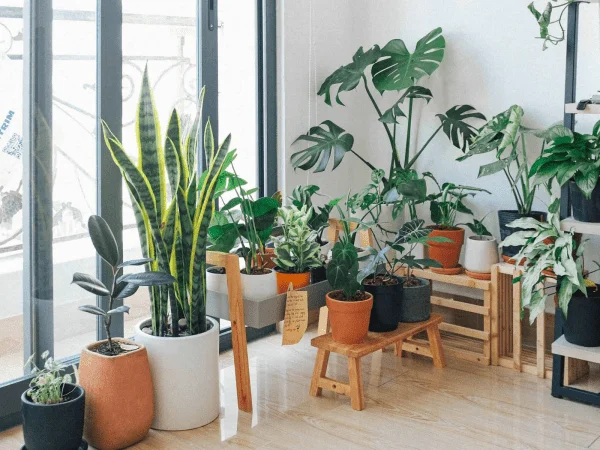
Who doesn’t like Monstera or Pachira? These gorgeous, top-dollar plants have left a long-lasting impression – not just on us but also on our environment.

Native to the Central and South Americas, such plants when brought to a foreign land needs a lot of help to survive. After all, change of place doesn’t impact our health alone but of plants too.

Understanding nativity or place of origin of plants can help you make conscious and cost-effective decisions for your garden.

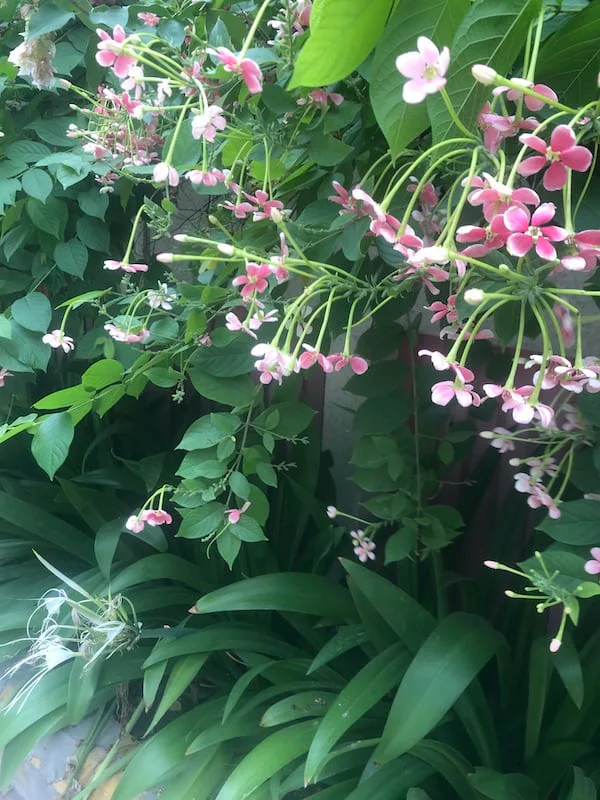
Build your garden instead with native plants such as Champa (Plumeria), Chameli (Jasmine), Balsam (Rose Balsam) and so many other aromatic, medicinal ones.

They will not only uplift your senses but also support the friends of our planet aka bees, butterflies, birds.

Special Growing Conditions

Lucky Jade and Aloe escaped the scorching heat of Africa’s desert to make their way into our tropical and humid climate.

To make such succulents survive, one has to invest in a special soil mixes, growing conditions, etc. to replicate their home environment.

Overwatering and wrong soil mix issues among succulents are the most as compared to other plants,. Such issues reduce their survival rates to negligible.

Instead, choose native succulents such as Malayan Spurge (Euphorbia antiquorum), Indian Spurge / Dog’s Tongue (Euphorbia neriifolia).

Such plants are well-versed with the local environment. It can be a good start to opt for such native, hardy succulents, if you love such plants.

Toxic Content in Plants

Talking about mindless gardening and not mentioning about Dumb Cane will be really dumb on our part.

Dieffenbachia, popularly known as dumb cane, has the potential to render someone speechless. It is one of the most toxic houseplants commonly found today. With its poisonous raphides, it can give someone infectious skin allergies to both people and pets.

Similar to dumb cane, most exotic houseplants today such as ZZ (Zamioculcas zamiifolia), Peace Lily (Spathiphyllum) etc have toxic elements which can harmful to humans and animals upon ingestion or exposure.

When you think of creating an outdoor garden, replace such plants with native varieties that have numerous health benefits.

From nettle to neem, select plants that are useful to you, not harmful for your kids, pets or anyone in the family.

Depletion of Resources

Imagine one day you wake up in a city taken over by aliens! As crazy as it sounds, growing exotic plants, especially outdoors, is just like inviting an alien invasion.

In order to survive in unfamiliar, sometimes hostile conditions, such plants reproduce in abundance to create their future generations. In the process, they not only take over the local habitats but also erode soil quality over time by sucking out groundwater, essential nutrients, etc.

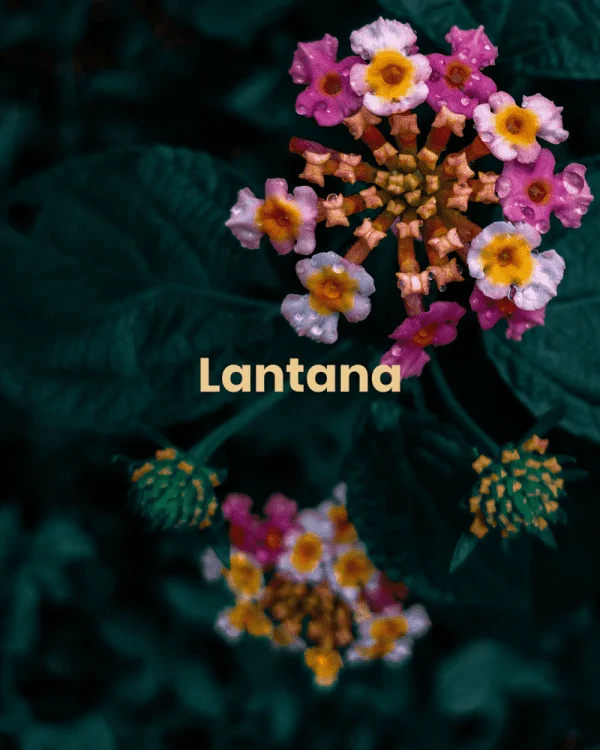
Lantana, Morning Glory, Bougainvillea, Eucalyptus, Pine are a few examples of invasive species in India which have outrun several native plant varieties.

Native alternatives to these plants such as Ixora, Thunbergia, Madhumalti (Rangoon Creeper), Sal, Deodar are beneficial to both – your garden and our environment.

Barrier to Biodiversity

Plants which have originated in some other parts of the world and introduced in an unknown place are known as exotic plants. Such plants are cultivated in controlled environments to make them survive on foreign soil.

Some of the favourite houseplants Pachira, Dracaena have originated in the West and introduced in all parts of the world. Such cultivation not only disrupts the local environmental cycle but also degrades the foreign habitat.

Instead adopting and using plants which are native, originated or endemic to your region can help preserve soil health, biodiversity, among several other benefits.

Keep this is mind the next time you choose plants or seeds for your organic farm or lawn.

Categories
blog Sustainable Gardening Basics

Microblog Series: Why should you opt for native plants in your home garden

Native plants play a vital role in supporting our lives as well as the biodiversity around us. When starting a home garden either indoors or outdoors, one must consider choosing plants which are indigenous or native to the environment one lives in.

3 reasons why you must choose native plants for your garden:

1. They complete their family – other plant species find it easy to co-exist with them.

2. Their friends depend on them – birds, butterflies, insects, worms, etc derive their food, nutrition, shelter, medicines in the form of nectar, pollen, seeds, leaves from them.

3. They hold us together – moisture, soil, water, sunlight – all facilitate the natural multiplication of plants and become a part of the larger ecosystem we thrive in.

Besides the above, native plants are also low on maintenance as they’re well equipped to adapt with the local environment.

When starting a home garden either indoors or outdoors, one must consider choosing plants which are indigenous or native to the environment. This is the foundation of building an eco-friendly garden. Native plants also tend to have higher medicinal value which is good for your well-being.

Read more about our sustainable gardening services on Peepal. Link in Bio
Categories
blog Sustainable Gardening Basics

How home gardening can support local biodiversity and ecosystem

Charity begins at home and so does, change.

A small change in our gardening practices can go a long way in creating a sustainable garden. And it all starts from choosing the right kind of plants.
When it comes to create indoor or outdoor gardens, plants are often seen as objects of décor, aesthetics, and beauty.
However, they serve a much larger purpose of providing various tangible and intangible benefits to all living and non-living things on earth.

Take for instance, the pipal (ficus religiosa, the sacred fig tree).

It is a thriving ecosystem within itself with every inch, and function of the tree designed to support life.

From aiding natural reforestation through seed dispersal to giving shelter to fruit-eating birds and insects, this benevolent pipal tree has something in store for all.

Like pipal, India boasts of over 18,000 native species of plants that play an important role in supporting local biodiversity and human life in form of food, shelter, resources, medicine.

Here are a few ways in which you can support a natural ecosystem through your home garden. For both indoor and outdoor garden, choose these types of plants:

1. Plants that are native or indigenous to the place of your stay.

Plants that are native or indigenous to the place of your stay. Such plants are well-equipped to handle the climatic, soil, water conditions and hence, put lesser strain on the environment.

2. Plants that attract pollinators such as birds, bees, butterflies

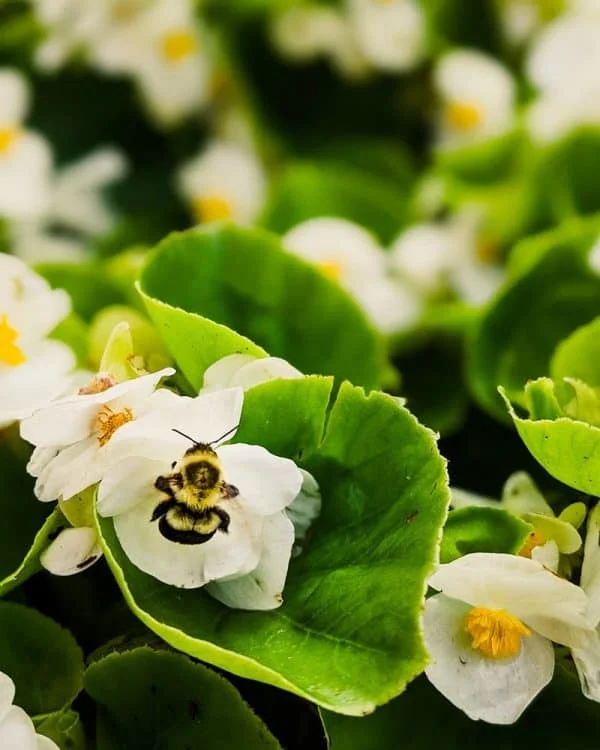
Plants that attract pollinators such as birds, bees, butterflies. You can share nature’s bounty with them as they help in pollinating seeds from where we get our own food.

3. Plants that optimise therapeutic benefits

Plants that optimize therapeutic benefits from gardening for you and others. From flowers that spread their sweet fragrance in your spaces to providing nectar to butterflies, choose native flowers.

4. Plants that can distinguish beneficial insects from garden pests

Plants that can distinguish beneficial insects from garden pests and protect other plants from being infected. Just like us, plants also have their own in-built, self-defence system.

5. Plants that supplement growth of other fellow plant

Plants that supplement growth of other fellow plants and not outrace, strangle them to make them extinct. Community sharing is one common quality between us.

Such knowledge and conscious choices can go a long way for home gardeners in supporting a natural ecosystem.

Next in this series: Can a home garden sustain itself without our intervention
Categories
blog Sustainability

An entangled triangle

The love-hate relationship between science, economics and policy

Our ancestors outwitted us in several ways. They could anticipate the future earlier than us; they could comprehend human behaviour better than us; they could frame policies sharper than us. From Rishi Vyasa’s Veda to Kautilya’s Arthashashtra, the repository of ancient knowledge continues to act as a guiding principle in the contemporary world too, for human advancement.

However, this intellect came along with an unexpected baggage consisting of unintended consequences.

Superstitions, for instance, shared a bilateral relationship with science and policy. Fear was used as a central theme to instil values, mould behaviours, inculcate habits, avert mishaps and shape cultures backed by both rational and empirical thinking. Such beliefs were then, institutionalised by cults and cultural groups with the help of policies (religions) and processes (rituals) at an individual level to achieve ‘status quo’ and a sense of ‘control’.

Needless to say, such practices which may have been introduced to bring positive change, had unfavourable ramifications.

Let’s understand this corollary with an example — menstruation.

It remains a provocative topic in most of the world even today, thanks to the countless taboos and superstitions that make this natural phenomenon so malevolent.

In India, particularly, the effects are experienced on a larger scale owing to the lower education levels among girls, cultural norms and religious sentiments shared by societies and most importantly, the politics behind appeasement of the vote banks. From the remotest villages to the most urbanised cities, menstrual shame is an indomitable curse, which has ingeniously managed to escape the political narrative till date.

In this direction, socially applauded movies such as Padman and Toilet — Ek Prem Katha made few important points, to me personally. First, the male protagonist takes up the mantle of women’s health and hygiene rather than the women themselves. Second, the conventional protection method — cloth was staunchly discredited as unhygienic, hazardous and regressive way of living. Infectious diseases were attributed to the widespread use of cloth in absence of ‘better’ avenues, especially in rural India.

If Bollywood can muster the courage to address this highly sensitive menstrual, sanitation subject in India, then why can’t parliamentarians? Or is this bold move actually powered by these parliamentarians?

Once again, the West triumphed over the East.

With the introduction of technologically advanced, scientifically proven, commercially viable and convenience friendly sanitary napkins, India’s women were finally set ‘free’ by ‘progressive’ solutions invented in the West.

This was followed by nationwide lobby efforts to create a new market. Surveys, statistics, case studies, documentaries were used extensively to influence the new customer.

“Incidents of vaginitis and urinary tract infections were 2x among women who used cloth as compared to others using sanitary pads, according to a 2015 study among 486 women in Odisha.”

And, just like that, the West gained market power by controlling the demand — supply equation of the INR 25.02 billion feminine hygiene products market.

“Whisper (P&G) held the largest market share (51.42%), followed by Stayfree (J&J) and Kotex (Kimberly-Clark) in 2018 according to Feminine Hygiene Products Market in India 2019.

Hey, but what happens to the menstruation related taboos and superstitions?

Well, these issues are best left as a corporate citizenship or CSR campaign. It not only makes an engaging YouTube advertisement but also earns goodwill to be messiah of the feeble Indian women.

Hey, but what happens to the menstruation related taboos and superstitionsAnd just when, the battle against menstrual hygiene was won, a new war emerged from the dumps — literally. The highly commercialised progressive solutions for women, turned out to be regressive for the environment. Disposal of sanitary napkins — a non-biodegradable waste — is posing to be a serious challenge for governments, municipalities and environment.?

“In India alone, 12 billion pads are produced and disposed of annually where a single pad could take upto 800 years to decompose.”

Didn’t the West think of the implications of such ‘progressive’ solutions? Can nothing be done to reverse this impact?

Of course! The West has now turned to reusable / washable / sustainable solution — cloth sanitary pads.

But isn’t this a tad hypocritical? Statistics revealed that cloth pads were responsible for poor menstruation hygiene among women. Perhaps, it’s the composition or design of the cloth that is making the difference now?

Turns out that the modest cloth wasn’t the culprit after all. Information asymmetry was. In ancient times, it led to superstitions while in the contemporary world, it led to environmental degradation — the unintended consequences created by the entangled triangle of science, economics and policy.

The science behind poor menstrual health, the economics of feminine hygiene market and the policymaking to influence beliefs and behaviours of menstruating women have found ourselves in the same spot as we were decades ago. As the world realises the negative implications posed by ‘progressive’ technologies on the environment, ancient wisdom once again prevails. Cloth sanitary pads — in all sizes, colours, shapes — are all set to make a comeback in the USD 521.5 million Indian market.

Our ancestors must have preempted this day. They knew we will go around in circles and come back to square one.

Categories
blog Sustainability

A full circle

Lately, I have developed a new fetish for terracotta. One product, in particular, fascinates me the most — teacups, infamously known in India as kulhad.

Suddenly, the world is going gaga over this good old product. Evicted for convenience-based alternatives over the years, the humble clay is finding its way back into the plastic culture as a sustainable solution. Today, these teacups not only come in all sizes and shapes but also with tags such as ‘Luxurious’, ‘Food Safe’, ‘EU-approved’ et al.

Until two decades ago, if someone (from the East) promoted terracotta, yoga, Ayurveda or Sanskrit in the West, then judgements would have been passed, inferences would have been made, and conclusions would have been drawn. How can such primitive concepts emanating from a socio-economically backward and developing nation be relevant to the modern needs of the technologically progressive, developed world?

Cut to 2020. In the USA alone, demand for yoga practitioners was estimated to be 55 million according to global statistics. Germany has the highest number of Sanskrit scholars outside of India and each year, the commitment to learning the language is deepening.

But why would an advanced nation with the highest political and economic position embrace such ancient scriptures and practices from a lesser developed one?

Let’s explore this conjecture with an example — agriculture.

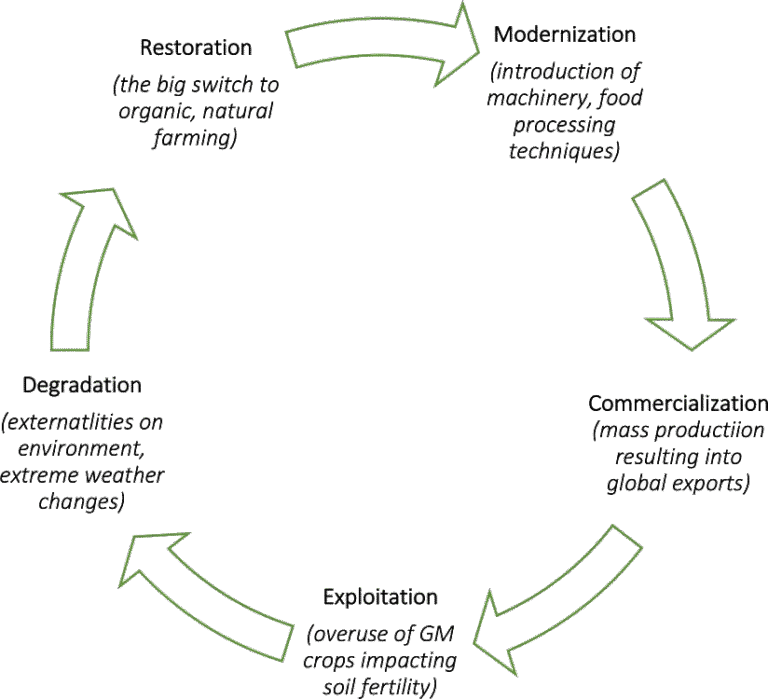
What started in 1850s as the Agricultural Revolution, then extending into the Great Divergence of the 19th century, provides an insight into the symbiotic relationship between technology and policymaking.

Dwight D. Eisenhower, the 34th President of the United States, drew this parallel in his annual speech on January 05, 1956. Excerpts:

“We have a broad and diversified mobilization base. We have the facilities, materials, skills and knowledge rapidly to expand the production of things we need for our defense whenever they are required. But mobilization base requirements change with changing technology and strategy.”

“No other resource is so indispensable as the land that feeds and clothes us. No group is more fundamental to our national life than our farmers.”

With the introduction of technologically advanced, scientifically proven, commercially viable and convenience friendly sanitary napkins, India’s women were finally set ‘free’ by ‘progressive’ solutions invented in the West.

“The dimensions of government responsibility are as broad and complex as the farm problem itself. We are here concerned not only with our essential continuing supplies of food and fiber, but also with a way of life. Both are indispensable to the well-being and strength of the nation.”

“This is still true in this era when improved living standards and rising national requirements are accompanied by swift advances in technology and rapid obsolescence in machines and methods.”

Against the backdrop of post-World War II, American agriculture was reeling under a unique challenge — unpredictable yields, harsh weather conditions and declining farm income. Technology advances in the US such as hybrid farming, chemical fertilizers and pesticides and biotechnology changed the face of agriculture by enabling increased farm productivity, reliable and higher yields and sustained profitability. Policy measures, on the other hand, facilitated a launchpad for corporations such as Monsanto, DuPont to propel commercialization and gain market power in international trade. This period marked the golden era in the West’s modern history with its meteoric rise as a global superpower.

Everything was hunky-dory until the fog around this fast-paced evolution began to dissipate, the externalities came to the surface and the circle of life started to evidently appear.

This progress came at a colossal loss to the West — the soil, plants, cattle, birds, bees, water, air, clouds, and of course, humans — each element experienced the brutality of modern science and technology. What seemed like an innovative solution for securing food safety, now appeared as a disservice to nature and counterproductive to human survival.

At this juncture, the West met the East.

Ancient practices such as organic farming — a concept borrowed from the developing world, were promoted by governments and celebrated by policymakers as a human and environmental welfare agenda.

Government initiatives such as the 2014 Farm Act facilitated the cost of organic certification (among other aspects) for farmers while the recent $867 billion farm bill introduced in 2018 funded organic farming research.

The outcomes of these policies reflected in the adoption of the organic technologies widely and commercially.

A recent survey conducted by the Census of Agriculture revealed that number of certified organic farm in the U.S. increased by 17% and sales by 31% between 2016 and 2019, touching an all-time high in sales of $9.9 billion in 2019 alone.

Today, chemical-free food produce dominates US markets, vegetarian lifestyle is widely adopted, cold-pressed juices are being preferred over processed, eco-friendly way of living is the new theme and the list continues.

Today, chemical-free food produce dominates US markets, vegetarian lifestyle is widely adopted, cold-pressed juices are being preferred over processed, eco-friendly way of living is the new theme and the list continues.

As the West continues its quest to negate manmade disasters, the East is realizing the hazardous impact of banishing its native practices under the influence of foreign ‘success’.

There were striking similarities between the challenges these two agrarian economies (the US and India) faced — from declining farmer income, farmer suicides to harsh weather conditions. Such relatable conditions and subsequent innovations would have made the ‘progress’ story more believable. However, the dissimilarities between the policymaking and governance of these nations had far-reaching impact on the latter considering its size of population and disproportionate social justice systems.

Repercussions of injecting genetically modified crops, fertilizers and chemicals, intensive irrigation methods into the natural habitat must have been felt by the government’s in the East when the sun started rising in the West and it outshined the world. And then began the journey of reversing the sun’s transition to the East and reclaiming its position.

With this new realization developing nations, such as India, are marching ahead in the race of organic produce. At the back of government’s incentive programmes in the last decade that encourage farmers, startups, entrepreneurs, corporations to adopt the good old habits right from growing food to maintaining holistic health naturally, India is the highest contribution of organic producers globally today.

The East, a land of traditions, cultures, values, ingenious inventions has learnt a lesson the hard way. By going back to its roots, embracing ancient practices and applying tried-n-tested knowledge, the East can now comfortably claim — we have seen life coming to full circle.
Categories
blog Sustainability

Square one

An intersection of technological advancements and policymaking

It was a lazy Sunday afternoon and just like any other weekend, I was binge watching. This time it was one of my all-time favourite sci-fi movies ‘Mad Max — The Fury Road’. It makes a simple yet compelling point — the pursuit of a post-apocalyptic green place ended where it started from.

As the movie progressed, my mind began to drift away in joining the dots together. The blurry line between scientific fiction and non-fiction was disappearing and something, preposterously common between the two was becoming vividly evident. Both forms exploit the idea of using advanced technologies to save mankind from extinction by discovering newer horizons and building better habitats.

But how could scriptwriters peek into the future before scientists? There have been astounding similarities between the vision of filmmakers and the natural disasters taking place now. Few movies that show this correlation include Contagion (2011) > Covid-19, Interstellar (2014) > sandstorms in China and Martian (2015) > SpaceX Mars mission.

The phantasmagoria projected by sci-fi movies and the actuality represented by the real-world scientists intersects at technology and policy. It may seem like a coincidence, but history tells us that early warnings of climate change have been ignored by governments, creating negative externalities on individuals, degrading public goods such as air, water, land and accelerating irreversible environmental damage over the years.

The expeditious progress of the West has always fascinated me. Be it the scientific and technological progress it has made over the years or industrial revolution that it has pioneered or the Hollywood action movies, there’s something surreptitious about it.

Did they really have access to an Atlantis equivalent system of information? Or did the tectonic plates push an entire nation of intellectuals westward? Or did they try more, fail more and hence, experience more than the rest of the world?

On the other end of the spectrum, I wonder why was NASA or Google established in the US and not in India (despite the fact that Indians constitute a sizeable chunk of its workforce)? Why did the Northwest Europe succeed in global trade and commerce while the Middle East did not (despite the fact that both the worlds have similar demographics and access to natural resources)?

The questions seem to be infinite, and the possibilities may be limitless ranging from human capital, geography, cultural differences to abundance of natural resources. Perhaps, the key lies in policy (the strategy behind governance).

In this 3-part series, I shall attempt to unravel a phenomenon with interesting examples of how technology in the quest for advancing mankind, is, in fact, bringing us back to square one.

Categories
blog Peepal uncategorized

Why I chose Peepal as the brand name?

One of the most difficult tasks in creating a brand is choosing the right brand name. In addition to being different, it also needs to reflect a brand’s philosophy in a simple and relatable way. A real tough challenge to crack.

Like many others, there were in-numerous brainstorming sessions to arrive at a logical conclusion. And one fine morning, I woke up to the name literally.

But before that, what is the brand and the business, one would ask.

As it turns out, sowing a seed or growing a sapling isn’t enough to create a truly green, sustainable world. The complete knowledge of gardening and study of our natural world determines how well we are inching towards our green goals.

In simple terms, my brand aims to make a difference in the lives of people, plants and the planet we live. Not that simple, right? Let me break it down for you.

Good health is often described as a state of complete physical, mental, and social well-being and not just merely the absence of a disease.

One of the most underrated enablers in achieving this state are — plants. Several global studies show that gardening promotes physical health through activity, mental health through self-care, and spiritual health through discovery. To that effect and coupled with the Covid-19 lockdown, gardening took the centre-stage in our lives, globally.

While this may seem all known and good, there is bad news too.

Thanks to the internet, we can now buy these living things online — just like any other (non-living) thing. Thanks to technology, we can mass produce them in almost any climatic condition — making them exotic and aspirational. And thanks to cheap transportation, we can introduce them in any part of the world — making them invasive in the local ecosystem.

Plants, the genesis of a sustainable world, are creating a negative impact on our environment, if planted without knowledge and wisdom.

Consumerism and commercialization in the gardening, horticulture industry has given rise to the most unsustainable practices today, be it opting for exotic (non-native) plants or non-eco-friendly gardening materials (plastic, concrete, fiber).

Peepal was born out of this observation.

Since the roots of these challenges lie in our past, we turned to the ancient wisdom and combined it with the present knowledge.

Peepal is not a tree — ficus religiosa but a combination of many things that universe has packed into one. And our brand aims to embody the many qualities that it has to offer:

  • The spiritual connection: a sacred, native, indigenous plant of India representing enlightenment
  • The health connection: a healer with medicinal properties that cures several diseases
  • The social connection: a common place for ‘people’ to celebrate and convene
  • The emotional and mental connection: a symbol of perseverance and adaptability
  • The sustainability connection: a key player in maintaining the ecological balance
Above all, it is humble unlike its sibling — ficus benghalensis also known as a strangler tree which is famous for building its foundation on someone else’s.