
March has just begun. Summers usually don’t make their official onset in India yet. Though, here we are today. Instead of the much-awaited spring blooms, we are looking at weather reports. Temperatures soaring to 40 degrees in early March is an unusual phenomenon and alarming for Mumbaikars.
This situation can be easily attributed to a man-made disaster that is swiftly turning into a health and well-being catastrophe – the Urban Heat Island (UHI) effect. It is rapidly painting our city grey driven by the quest for faster travel, larger homes, bigger accolades and higher aspirations.
Yes, we need all this to some extent, but what about the collateral damage it is bringing along? 13 heatwaves, 2 extreme heatwaves in 30 years, and an average of 8 days annually exceeding threshold temperatures, and of course, the deteriorating air quality. It is imperative that we address this dreadful issue at an individual level now than ever.
The question arises that how could such a huge challenge be addressed at an individual level. The answer lies in first, accepting this problem and second, in adopting simple practices that offsets the grey with green. Making our living and working spaces green isn’t just an aesthetic or aspirational want anymore. It is a necessity for our own survival, health and well-being.
In this effort it is imperative to preserve what we have and to create new spaces by either rethinking the old or building new ones altogether. However, what matters the most are the choices we make in this process. A simple aspect of choosing the right species of trees and plants to provide shade with their canopies, cool and purify air with their large leaf structures, provide shelter to biodiversity and some sensory experiences to people can go a long way for generations to come.
A few things can be done at a individual level to create your own microclimate to beat this heat slowly and eventually:
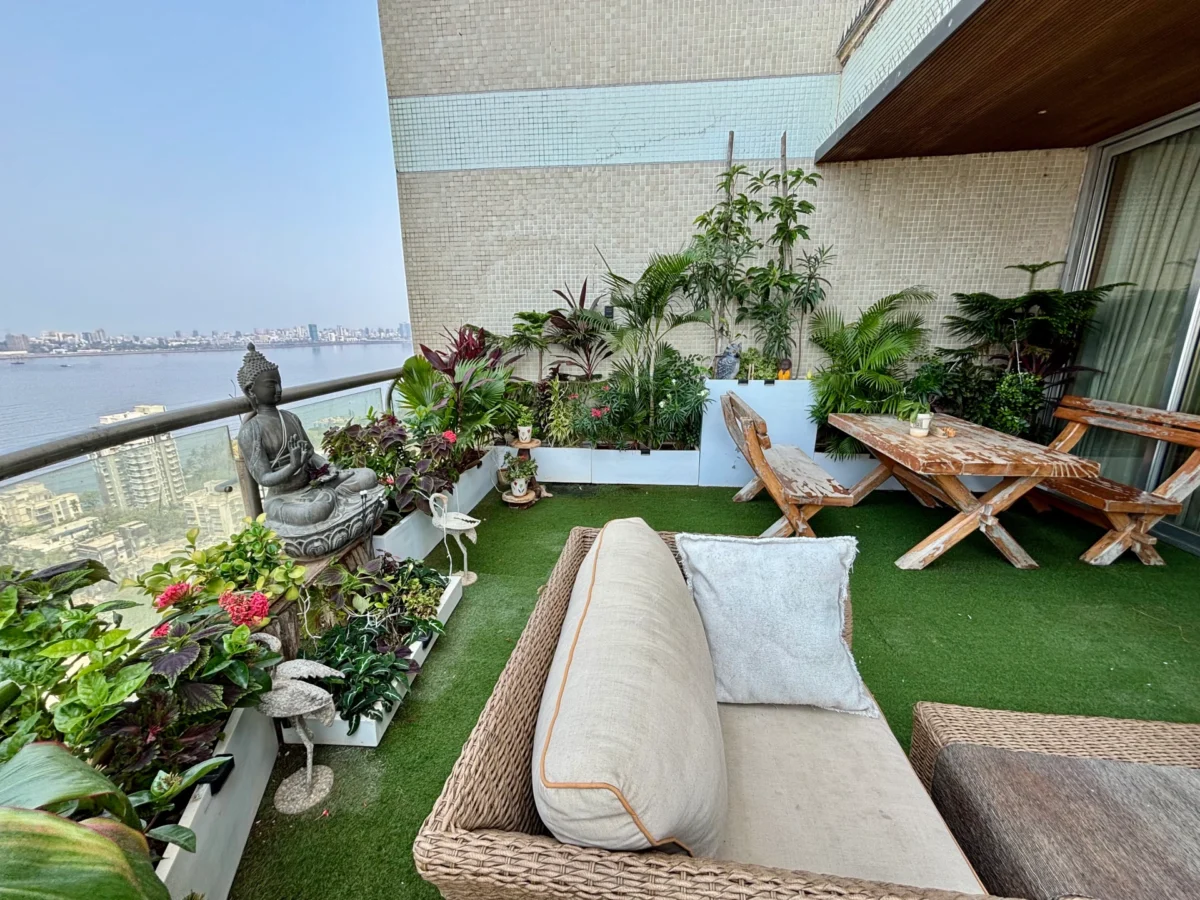
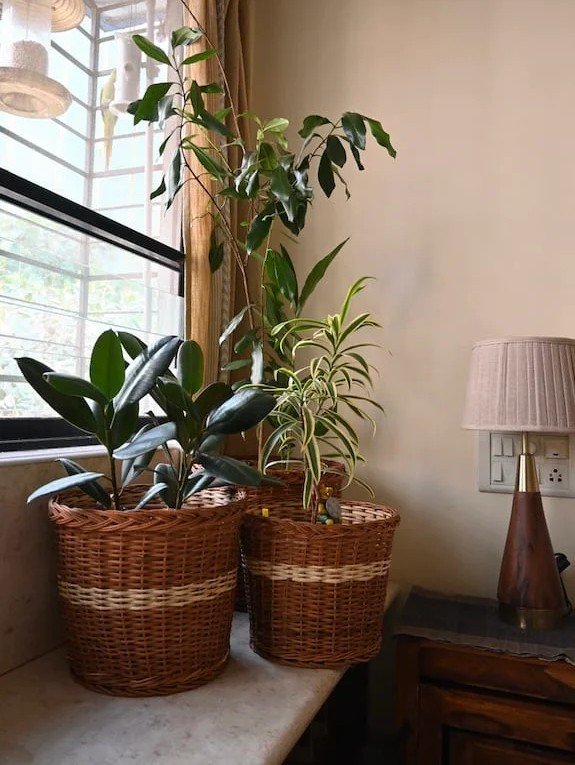
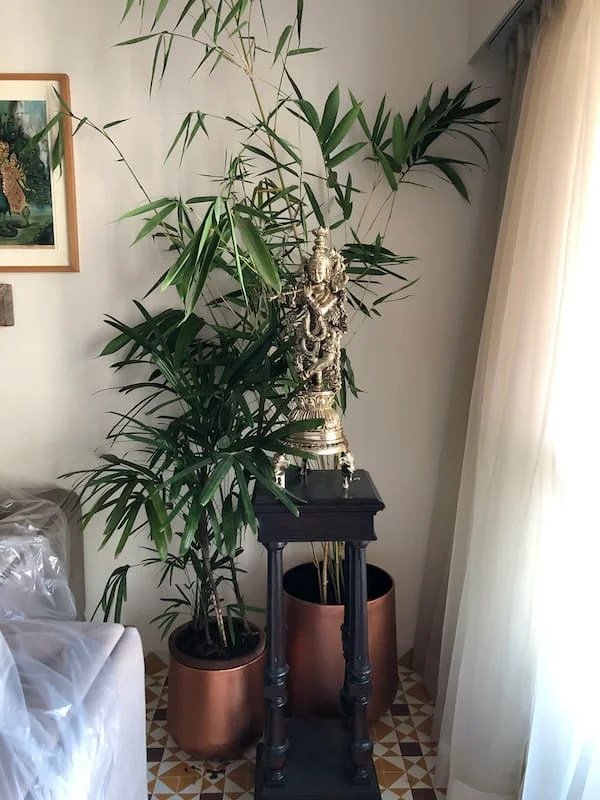
1) Immediate spaces such as balconies, decks, terraces, offices, etc.
While it may seem difficult, starting a personal garden is quite easy if done using the good fundamentals. From choosing native, hardy plant species suited for indirect or direct light to low-maintenance planting materials can add a touch of green in your day-to-day living.
General notions and misconceptions such as plants attract mosquitoes, post set-up high maintenance, low survival rates indoors, heavy initial costs, etc have long being deterrents towards this effort. However, with sustainable gardening practices, all these issues can be smoothly addressed to give you access to a greener and safer environment at your disposal.
2) Secondary spaces such as building gardens, rooftops, schools, etc.
The most underrated and unused spaces around us can be put to some good use. While most new residential and commercial developments have dedicated garden spaces, the older ones have a sizeable spaces that remain underutilised.
Residential or commercial buildings have tremendous potential of creating large green spaces that can act as a carbon sink, not just for them but for the entire neighbourhood. From vertical gardens alongside the boundary walls or retrofitting old gardens with native trees and plants to creating green rooftops or corridors, there are several opportunities for buildings to create their own microcosm of green.
Being a user of such facilities, all you need to do is urge the members to create such green facilities unanimously. It would not only benefit senior citizens, children but everyone and anyone to reap benefits of your own micro-climate.
3) All others such as farmlands, villas, second homes, resorts, etc.
When it comes to landscape, aesthetics often overshadows scientific logic. To create both an aesthetic and sustainable green space, it is imperative to adopt sustainable landscaping practices. After all, just planting trees or plants doesn’t guarantee green cover. It is the choice of planting as well as technique that matters the most.
For instance, to create a beautiful driveway one often uses Ashoka trees or Palms for visual aesthetics. However, in extremely hot locations such as Karjat, Alibaug where second homes or large developments are coming up, such trees fail miserably. They can neither create canopy and thus, provide almost no shade as compared to fast growing, shade providing and high dust accumulating trees such as Kadamb, Karanj, Saptaparni, Siris, etc.
People who are acquainted with Race Course Mahalaxmi or the Hanging Garden Road, would recollect the tree cover that almost gives a feeling of a green tunnel each time one drives through it. Such magnificent trees not just meet the aesthetics need but also provide a critical ecosystem for everyone’s survival. It is also possible to replicate such an effect on a smaller level with smart choices of plants.
It is time to make a choice between aesthetics over the survival. Both can be fulfilled if there is willingness to try something new (which is adopting older ways in a refreshed form) in this maximum city to a greener for us and our next generations.