
Categories
blog Sustainable Gardening Basics

The Times of India: Can a balcony garden actually reduce indoor heat? Here’s what science says

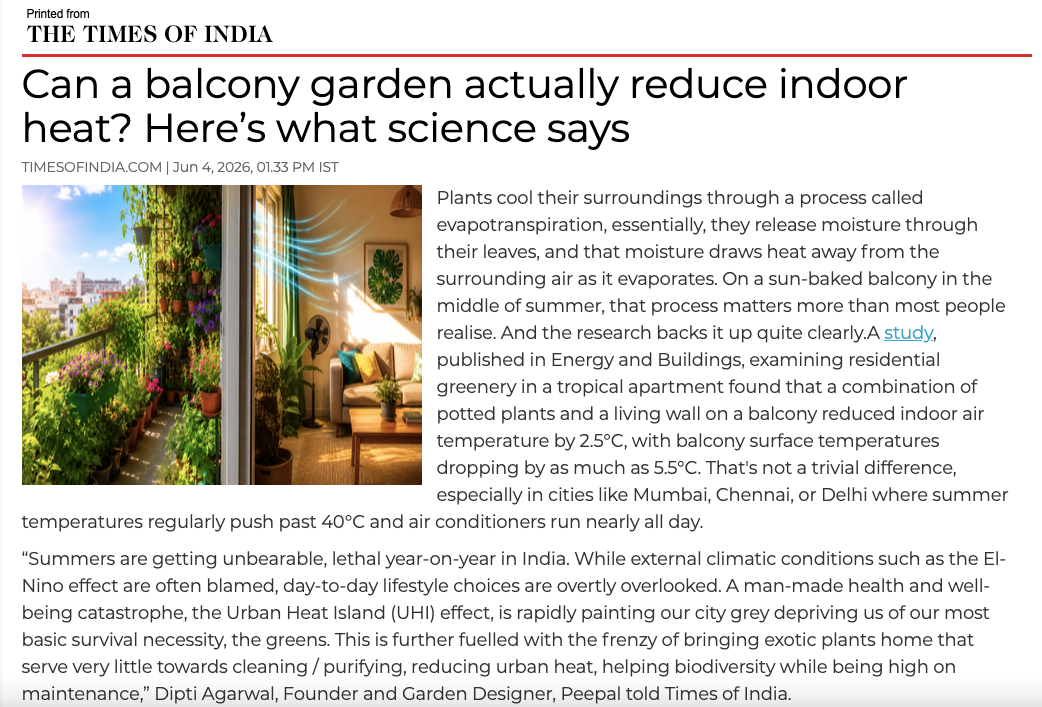
Plants cool their surroundings through a process called evapotranspiration, essentially, they release moisture through their leaves, and that moisture draws heat away from the surrounding air as it evaporates. On a sun-baked balcony in the middle of summer, that process matters more than most people realise. And the research backs it up quite clearly.

study, published in Energy and Buildings, examining residential greenery in a tropical apartment found that a combination of potted plants and a living wall on a balcony reduced indoor air temperature by 2.5°C, with balcony surface temperatures dropping by as much as 5.5°C. That’s not a trivial difference, especially in cities like Mumbai, Chennai, or Delhi where summer temperatures regularly push past 40°C and air conditioners run nearly all day.

“Summers are getting unbearable, lethal year-on-year in India. While external climatic conditions such as the El-Nino effect are often blamed, day-to-day lifestyle choices are overtly overlooked. A man-made health and well-being catastrophe, the Urban Heat Island (UHI) effect, is rapidly painting our city grey depriving us of our most basic survival necessity, the greens. This is further fuelled with the frenzy of bringing exotic plants home that serve very little towards cleaning / purifying, reducing urban heat, helping biodiversity while being high on maintenance,” Dipti Agarwal, Founder and Garden Designer, Peepal told Times of India.

Tackling this issue at a city’s infrastructure level is a gargantuan task but, one can address this issue with smart and sustainable greening efforts at their disposal, home gardens, she adds.

For Indian homes specifically, the evidence is encouraging. A study in Greater Noida found that terrace gardens can reduce ceiling temperature by 2°C to 3°C in winter and 5°C to 7°C in summer.

Agarwal says native and hardy species create a quick, thick green cover of leaves and provide a cooling effect. “Popular exotic plant choices such as Bougainvilleas are often opted in home gardens. However, one must distinguish plants that are heat-resistance with plants that can reduce heat in the environment. Bougainvilleas, while being globally-loved, often fail to maintain a thick, green look with their small and scanty leaves, thus being counter-productive for reducing urban heat,” she suggests.

The expert shares few guidelines on this:
 
  • Choosing the right species of plants that provide shade with their canopies, cool and purify air with their large leaf structures or create a natural green curtain can go a long way in reducing urban heat.
  • Simple garden design elements such as a trellis for balconies or terraces can help create a natural green wall or a vertical garden coupled with fast-growing climbing plants such as Thunbergia Grandiflora, Madhumalti (Combretum indicum), Aparjita (Clitoria ternatea), Chameli (Jasminum officinale), etc.
  • Another effective technique is layered plantation that uses different plant height combinations in descending order. Much like forests, this cascading effect helps in creating overlapping canopies and filtering sunlight before it reaches the bottom. For example, one could pair a tall palm or Champa plant with medium flowering shrubs like Ixoras or Jasmines to create a layer of visual and heat relief.
 

What practical advice would you give homeowners or apartment residents who want to create a balcony garden specifically to combat indoor heat during summer?

“Opting for native plants that have broad leaf structure, deep root systems, dark green foliage colour, can help cool the environment through evapotranspiration process. Releasing moisture, increasing air flow, blocking sun rays, thus reducing internal temperature are just a few of the several benefits of creating a well-planned balcony garden,” she suggests. “The wider leafy surface area you can add to your garden space, the better cooling effect you eventually create. At an individual home level, this cooling effect can be gradually felt with the right plant mix and low-maintenance gardening materials to maintain the garden’s health and look.”

Few examples:

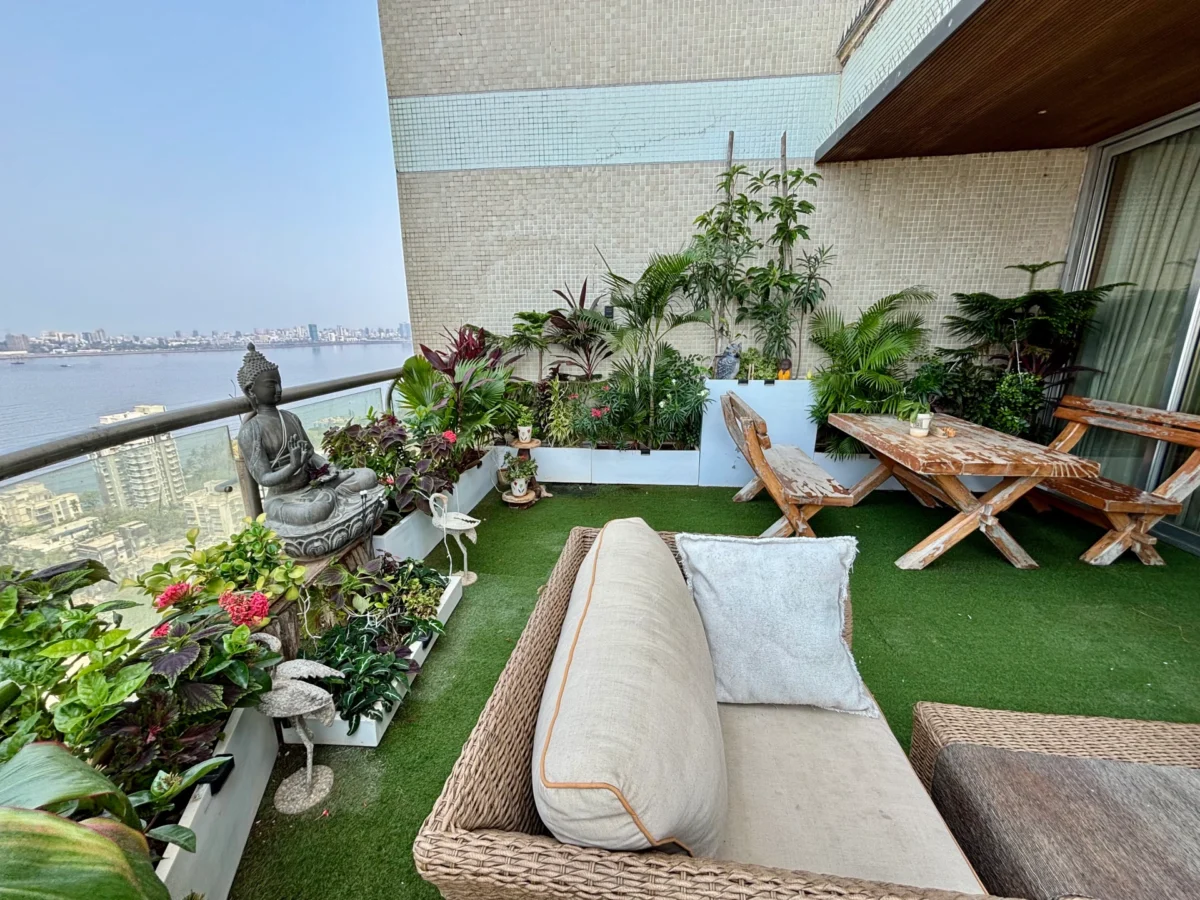
For balconies, says the founder, decks or terraces that receive direct sunlight, exotic foliage plants should bereplaced with native flowering plants. Few examples of medium heighted shrubs include Ixora (Ixora coccinea),Son Champa (Magnolia champaca), Nag Champa (Plumeria Pudica), Parijat (Nyctanthes arbor-tristis), Hibiscus(Hibiscus rosa-sinensis), Kaner (Nerium Oleander) among others. Even edible plants like Lemons, Curry Leaves,which tend to have thick foliage could serve the purpose. Such plants not only help elevate your internalenvironment but also support biodiversity. On the other hand, for spaces which receive partial direct sunlight(indirect bright light), one can opt for palms (although most of them are non-native) for Areca Palm (Dypsislutescens), Rhapis Palm (Rhapis excelsa), and Ficus varieties.

So yes, a balcony garden can genuinely reduce indoor heat. It won’t replace an air conditioner on a 45°C afternoon. But it will take the edge off, cut your cooling load, and make your home more liveable through summer. Plants that you grow anyway, doing something useful all day long. 

Categories
blog Sustainable Gardening Basics

Plant of the Month – Parijat

Botanical Name: Nyctanthes arbor-tristis

A marriage of beauty and benefits, Parijat, popularly known as Harsinghar and Prajakta, has many surprises in store.

Native to India and rest of Southeast Asia, this plant has been revered in several walks of life. From blooming in the night to being used as a key ingredient in food, Parijat is integral to India’s rich traditions from medicinal, religious and landscaping uses.

It is known by many names across the world – Night-blooming Jasmine, Tree of Sadness, Tree of Sorrow, Coral Jasmine, Sephalika and the list goes on. A small, deciduous shrub, Parijat produces striking orangish red and white flowers that are highly fragrant in nature that open at dusk and finish at dawn.

In addition to beautifying any garden or recreational space, Parijat offers a host of other benefits too. The orange dye from the corolla, nyctanthin, is used to dye silk. Traditionally, the native people of Eastern India used the plant to help predict weather and rainfall as the flowers were deeply associated with the autumn season. Being a sacred tree, this divine flower is widely used in India for making garlands, and other forms of worshipping.

Talking about medicinal purposes, the leaves have been long used in Ayurvedic and Homeopathy medicines for treating several bone related illnesses.

Religious and mythological stories around the flower are abundant too. It is being said that this flower has the bark of gold, leaves of copper colour and bears a fragrant, rejuvenate fruit. In Hindu mythology, Parijat was one of the five trees that emerged during the legend of the Samudra Manthana as described in the Mahabharata and the Puranas.  

Parijat can be easily grown at home in pots, provided the plant receives full sun – 4-5 hours of direct sunlight. It does wonders in an outdoor environment, if planned well.

Categories
blog Sustainable Gardening Basics

3 ways to transform your terrace

Let’s be honest. To have a terrace space in a space-starved city like Mumbai, is a blessing and privilege, both.

Beyond serving as a hang-out zone or an unused corner, a terrace can fulfil several lifestyle goals for its users, be it a personal or society space. With a burgeoning concrete jungle around us and rampant felling of trees, creating your own green sanctuary could be a good idea for your long-term health & well-being.

Here are a couple of ways in which you can transform your terrace into a multi-functional garden space:

1) Edible Garden

To have a sun-kissed space and not utilizing it to generate your own organic food, can be a big oversight. While several experts may argue that a vegetable or herb garden doesn’t meet the aesthetic goals of a terrace landscape, the fact is that there are ways on which it can accomplished.

From creating neat garden beds around the walls to raised beds which can serve as a central courtyard, an edible garden can be wisely integrated with the other elements. All you need is the intent of plucking your own food, at your convenience, at your doorstep. Be it a herb garden or your favourite fruits or the daily veggies you consume, such a terrace garden can become the purest source of your health journey.

2) Fitness & Wellness  

If the idea of an edible garden seems overwhelming, then you can consider balancing it with something more suitable to you. If you’re a fitness enthusiast, imagine working out in an open environment which is free of pollutants, fresh air and perhaps a degree or two cooler than its surroundings.

Yes, this can be made possible by integrating nature thoughtfully in your space. For instance, in place of using exotic hedging plants, one can create a border of tall, dense fruiting and flowering trees. Just the corners while keeping the central space free for your gym equipment or yoga mat. This way you can ensure two things a) create optimum shade in the central space while ensuring privacy from the surroundings b) maximize therapeutic benefits with the fragrance of fresh flowers in the mornings and fruits, edibles that you can relish. 

3) A Green Extension 

Still looking for something simpler? Then, consider having a simple green space which could be an extended space of your interior. Sometimes having even a smaller patch of green is good enough. Several studies show that people who spend time gardening or in garden, tend to have a better quality of life with improved physical, mental and social abilities.

From selective potted plants to an open lawn space with a comfortable outdoor seating, a water feature or just simply a green carpet, are a few ways in which this minimal green space can be created.

However, before you embark on this green journey, there are a few thumb rules to follow. Fundamentals of setting-up a terrace garden starts from waterproofing, drainage channels, structural strength and weight-bearing capacity are paramount to creating a low-maintenance gardening effort.